Despite how long it’s been, there aren’t a ton of games this time. My game group has been watching a lot of movies lately, mostly watching Christopher Nolan’s filmography in preparation for The Odyssey. In the past month, we’ve barely played at all.
If you haven’t seen it yet, my new game, Winds of the North, has a free demo available if you want to give it a try or just see what it’s about. It’s a solitaire gamebook set in Viking Age Scandinavia, where you can do just about anything you want: build, explore, hunt, trade, farm, raid, and much more!
On that note, I’ve also started the final updates for WotN, and once those are done, it’ll be time to submit them to DriveThruRPG, and once their approved, it’ll finally go on sale.
Lastly, I posted a trailer for my previous game, The Unseen World. I’ll be trying out trailers in the future, and maybe some gameplay overviews for my games. I went into more detail in a recent blog post.
- Agricola
- Brass: Birmingham
- Race for the Galaxy
- SETI (with Space Agencies)
- Nippon: Zaibatsu
- Saltfjord
- Valheim
- Tenby
- Fall of Rome
- The Fellowship of the Ring: Trick-Taking Game
Agricola
:strip_icc()/pic8093340.jpg)
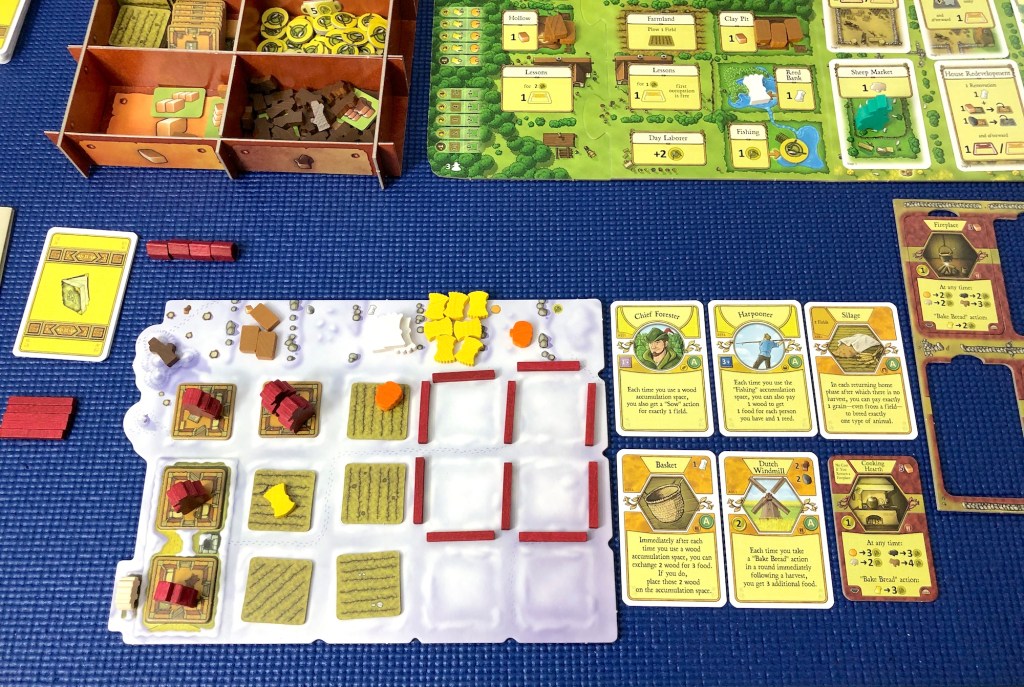
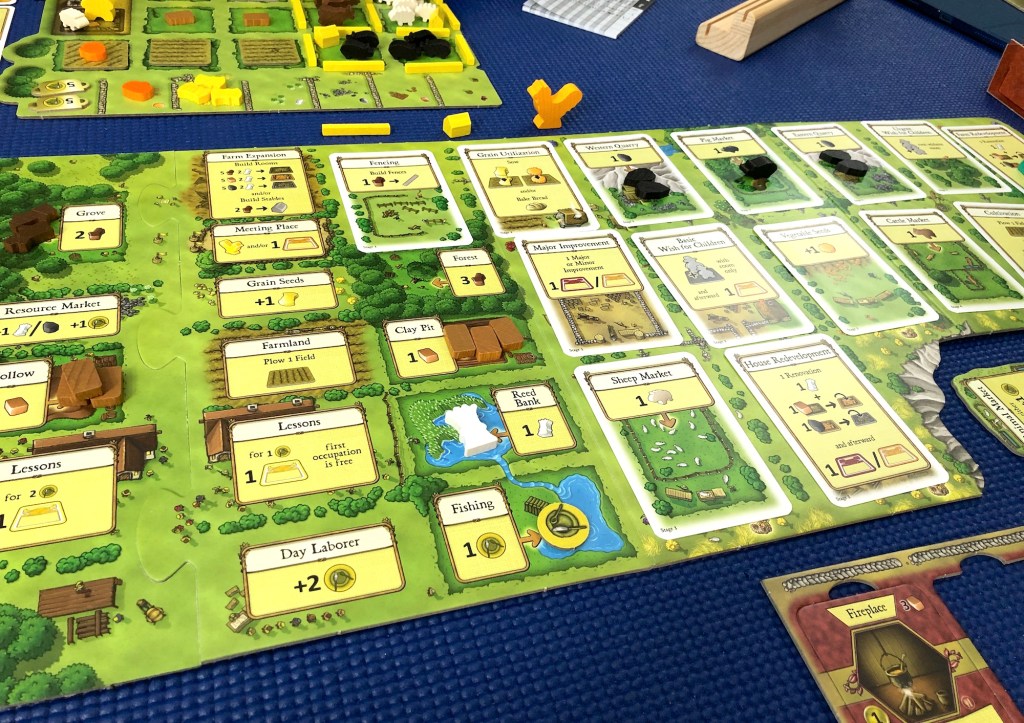
This was our first game with a physical copy, but we’ve played a bunch on BGA, and I’ve also had the app for a number of years. My copy is one of the anniversary versions with the big box, though I got mine on sale. It’s quite overpriced normally, given how little there is other than the game, and the box and insert are not particularly high quality.
Otherwise, I really like the updated components. I wish at least one of the included bonus decks had been a normal one to just add variety, but they’re all pretty strange decks. We haven’t played with any yet, though. We were also surprised that, despite these cards having been updated and improved, there were a lot of cards that were still confusing, and we only knew how they worked because of BGA. And after this play, I played a card on BGA that turned out to work differently than what we thought when we had played at the table. Maybe someday, we’ll actually know what these cards do.
- Agricola: 9/10 one of my favorites.
Brass: Birmingham
:strip_icc()/pic3490053.jpg)
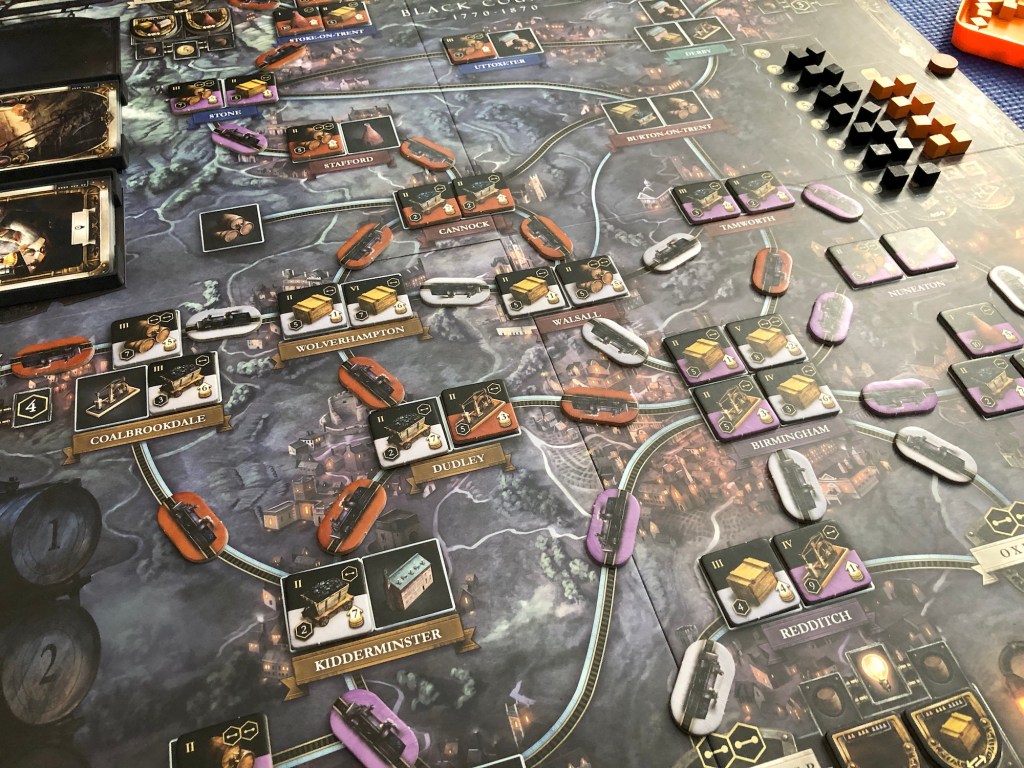
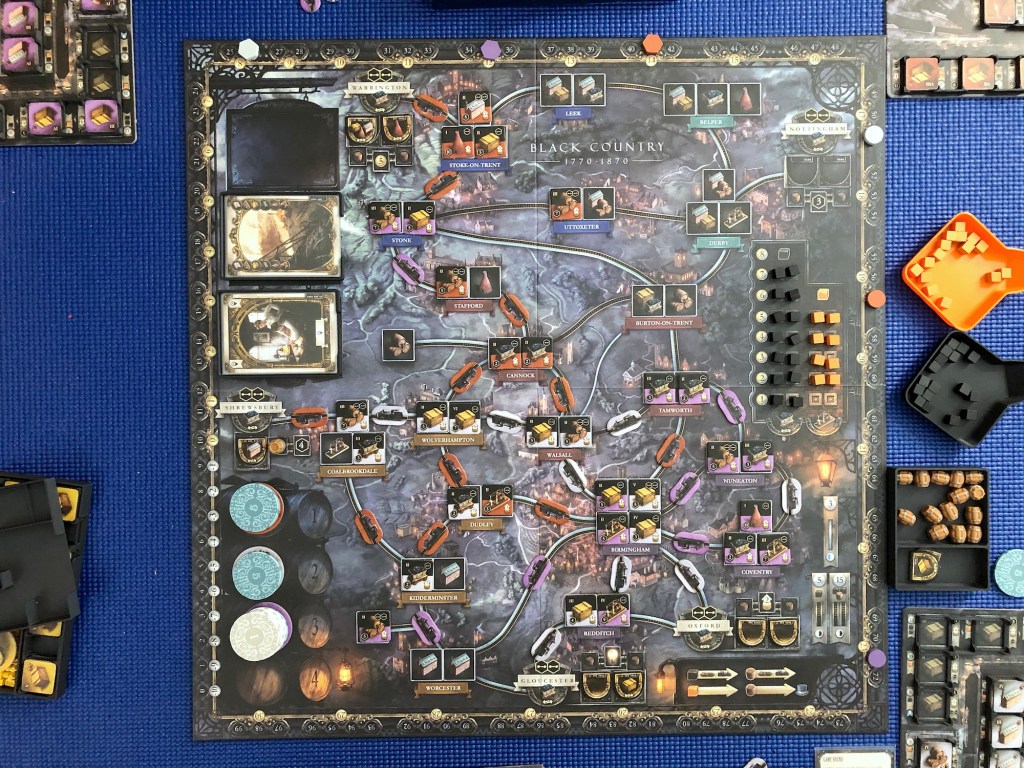
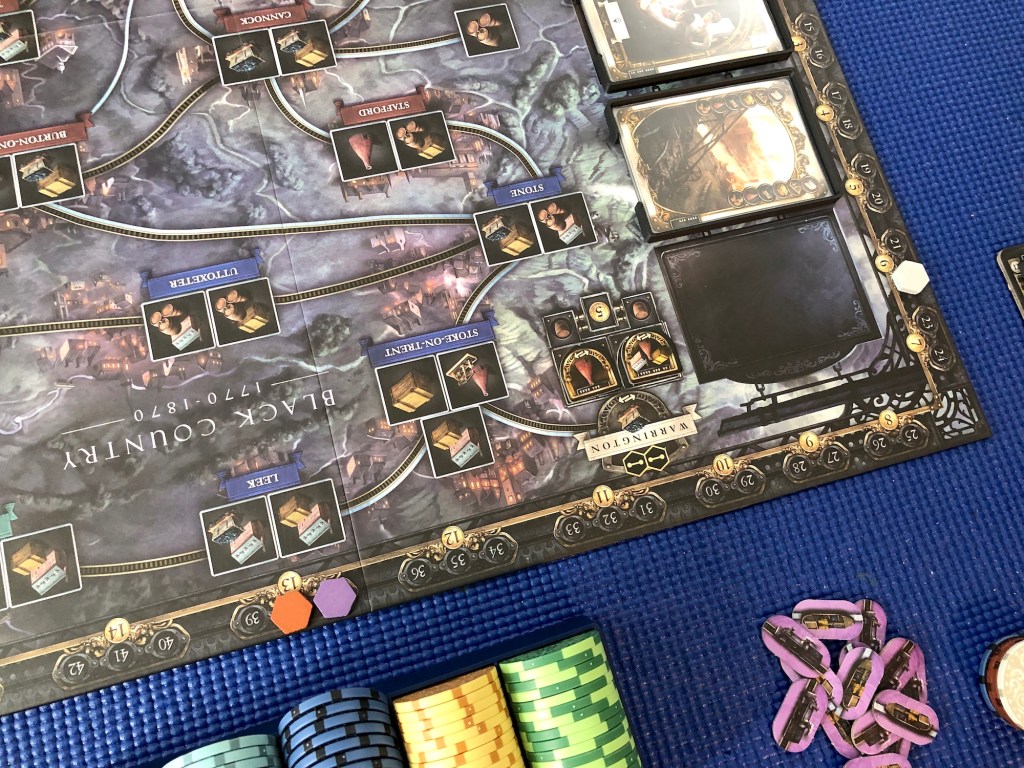
We’ve played Brass (one version or another) a few times now. This time, it was back to the cardboard components (it’s a long story), but I wasn’t a huge fan of the 3D printed ones. The token trays for the player boards aren’t too bad, though.
This was a close game, and for the first time, I won (barely). It’s sometimes painful needing to take loans in this game, but sometimes you need them, and it’s a great tool for spending less money during a round, making it easier to go first in the next round.
- Brass Birmingham: 8/10 a tense but fun Euro.
Race for the Galaxy
:strip_icc()/pic5261714.jpg)
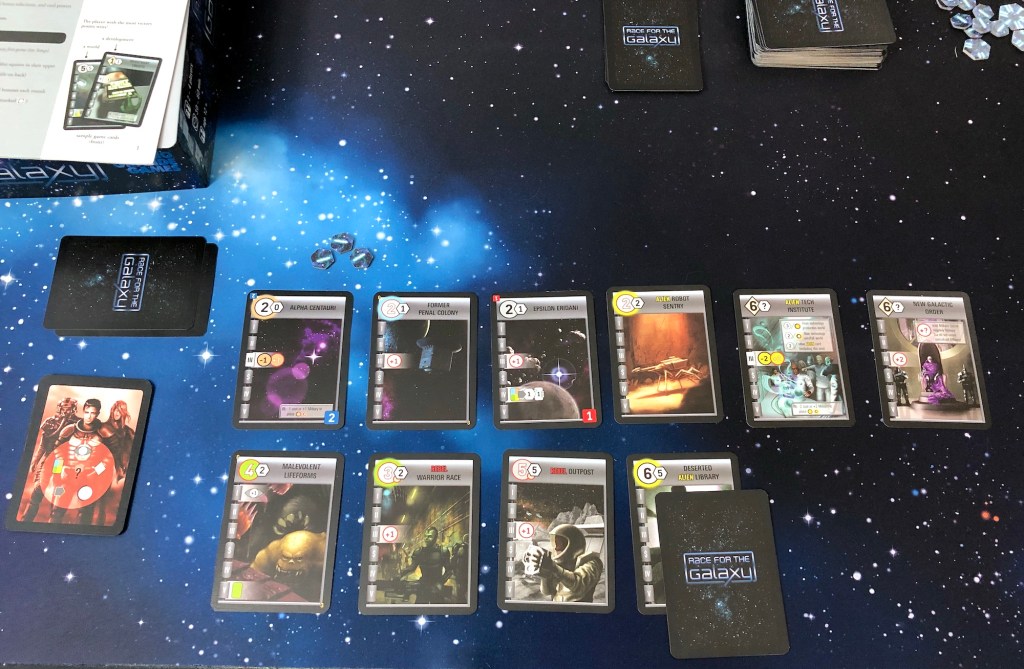
I forget which movie it was, but there was one I wanted to make sure we had time for, so I picked this to bring back out. We hadn’t played this in the group for several years, though I’ve played the app a few times.
Mechanically, it’s such an easy game to bring back out once you’ve gotten the hang of it. And it’s loose enough with the theme, that it’s good to bring out if just want a dash of sci-fi flavor. At the time, I was playing or had just finished a Rimworld playthrough, and wanted a bit more of that sci-fi empire/territory building. I got some good mileage out of some alien cards this time.
- Race for the Galaxy: 8/10 a quick and satisfying card game. A shame about the expansions, though.
SETI (with Space Agencies)
/pic8160466.jpg)
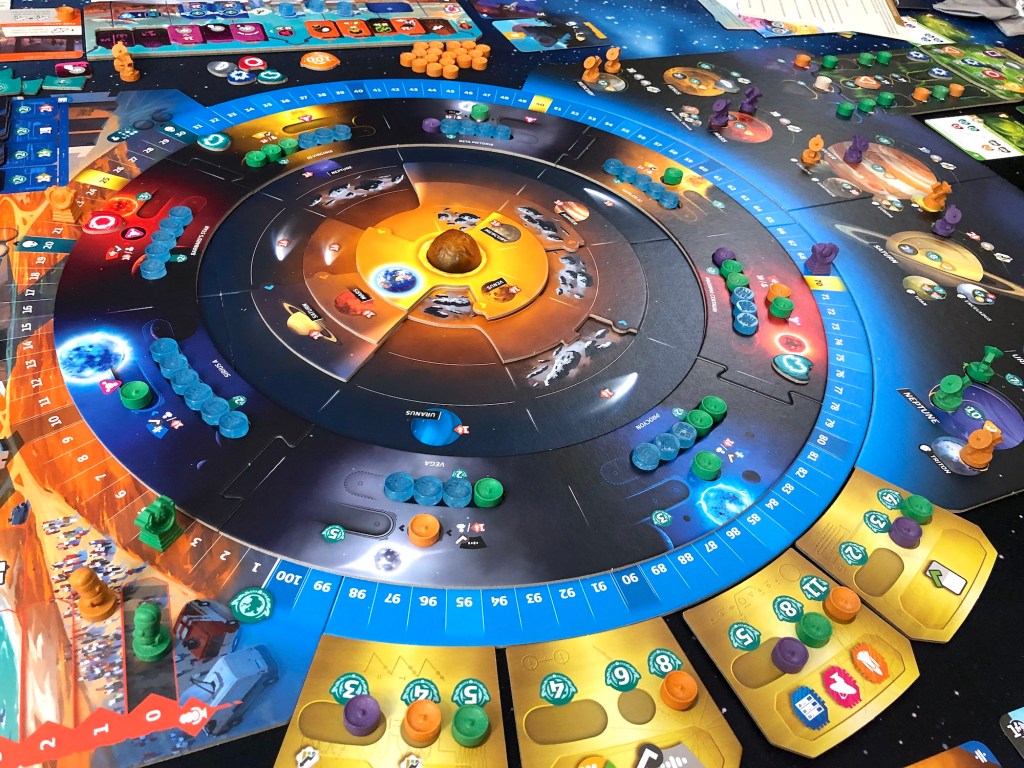
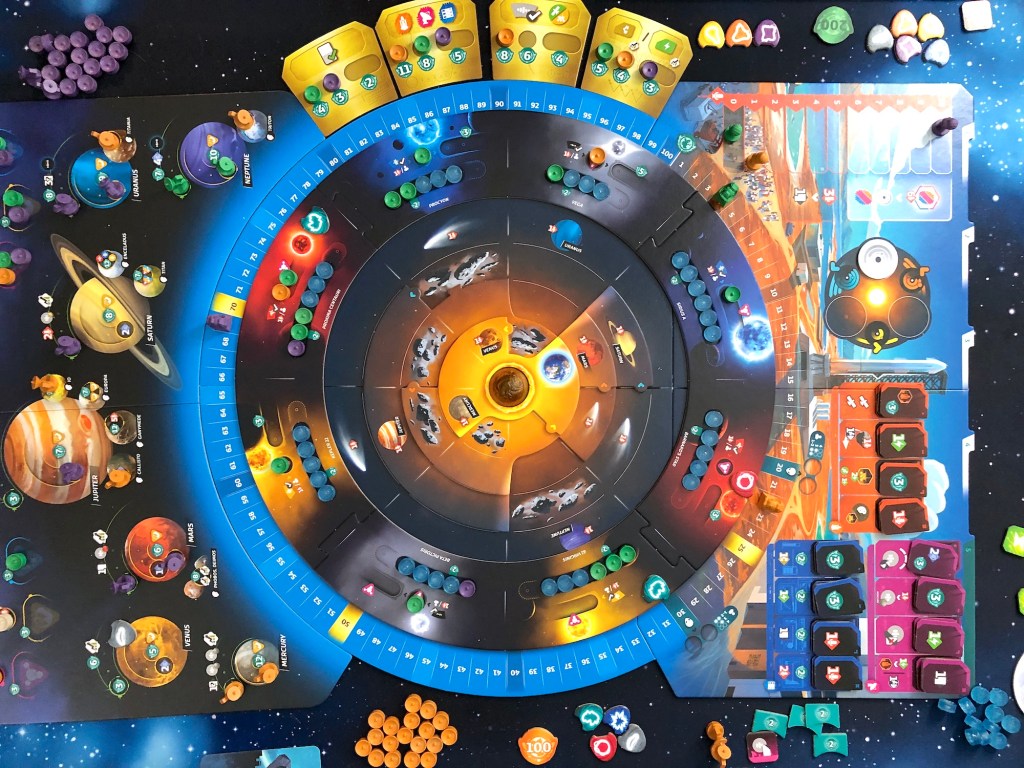
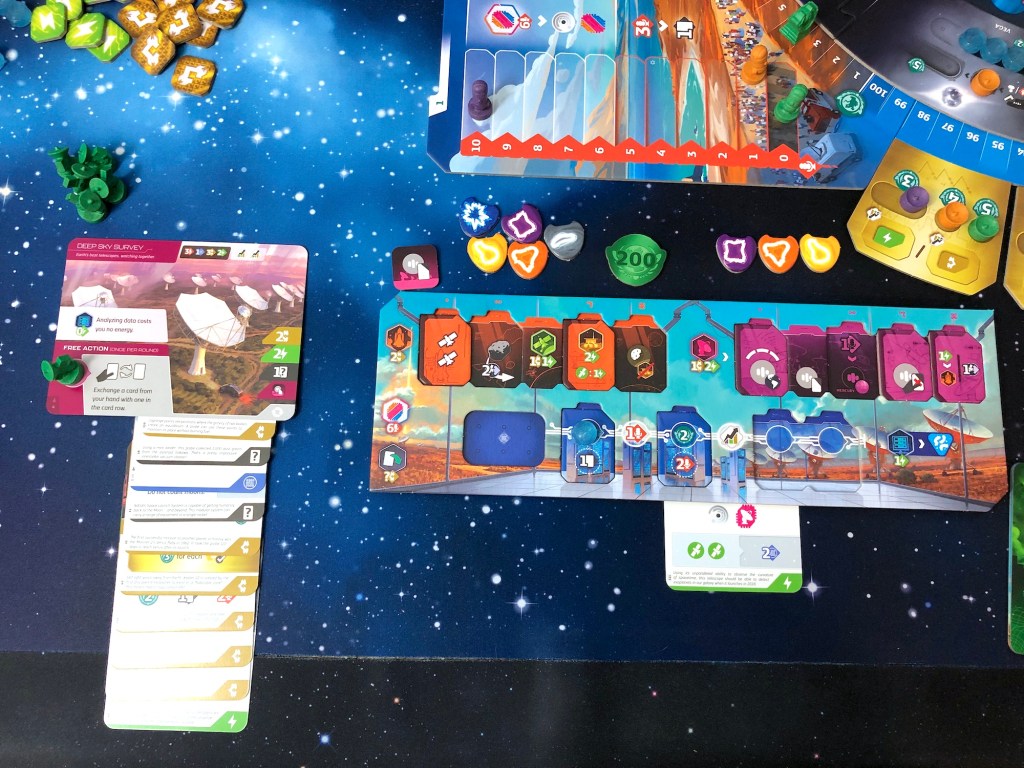
We haven’t played the base game that much, but we were interested to see the “prelude” part of the expansion. Ultimately, it didn’t end up as the auto-include we had hoped. You play 1 fewer rounds, but by the end, turns are more complicated and slower than in the base game, so you don’t save time.
Overall, I still enjoy the game, though turns can get a bit fiddly sometimes, especially with certain aliens. Lots of little steps to make sure you do, and rewards for things that might add more little steps, triggering more little rewards. By the end, it can be difficult keeping track of who was actually taking a turn when it’s been five minutes of triggering things and other players getting points or whatever else.
- SETI: 7/10 a solid, crunchy Euro with a cool theme.
Nippon: Zaibatsu
/pic8844519.png)
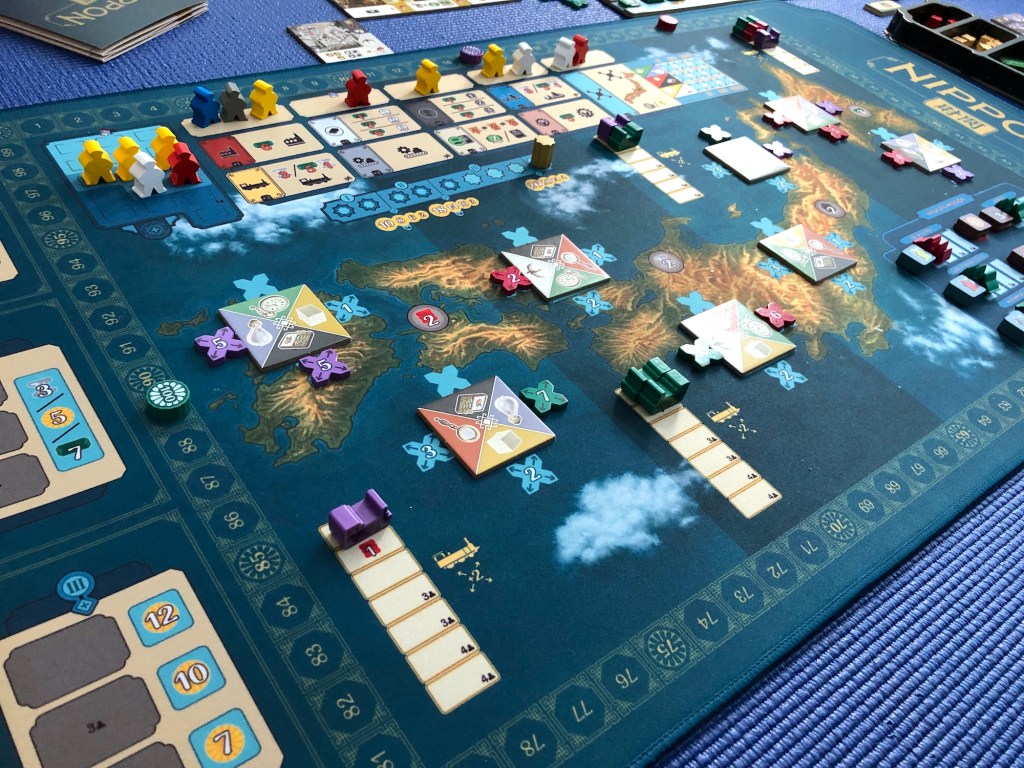
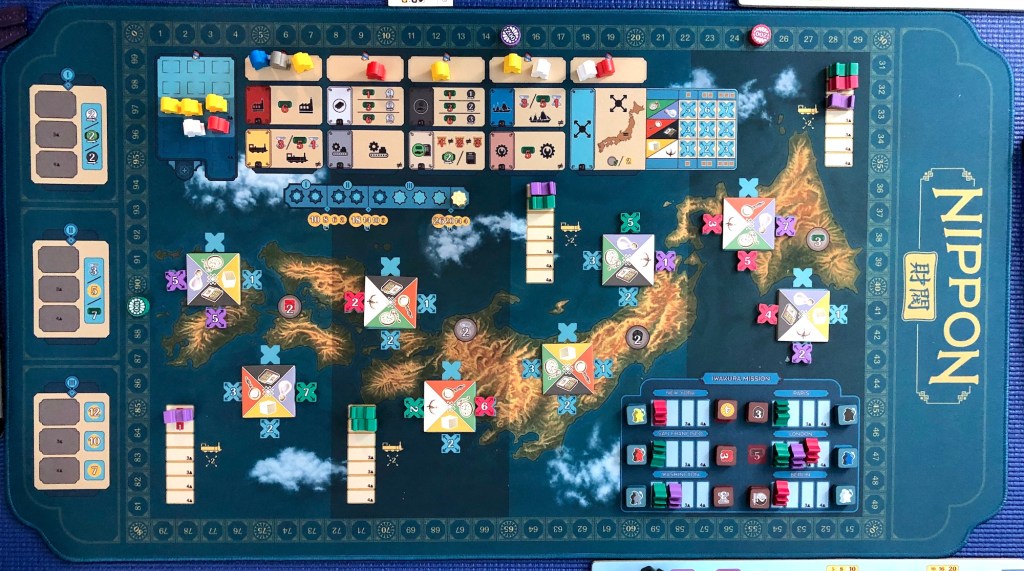
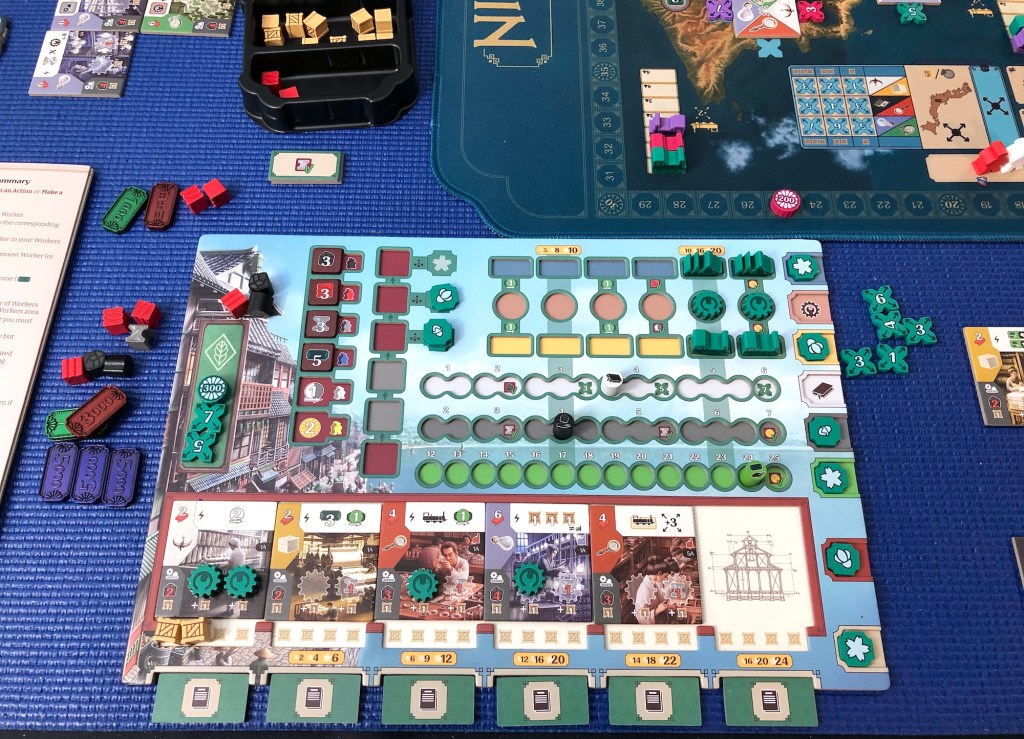
We’ve played the original a few times, and we’d followed the campaign of this one, so we were eager to see the differences for ourselves. Production wise, there’s a few areas where they could have toned it down some, used less space, simplified layouts a little. But the iconography seems good, overall. The game has become more fiddly, unfortunately; there are just so many tiny pieces now.
There are definitely some neat changes, like the ships and bonus workers, and simplified contracts. Though, this version of the game is definitely less streamlined. It’s a modern Euro now, warts and all.
Unfortunately, during the game, I seemed to be doing well, setting up lots of things, getting bonuses, and my brother seemed to be struggling almost every round. But by the end, I lost by a fair amount, and my brother won by a fair amount, and no one at the table could really tell why. All three of us were just, “How did that happen?” I don’t think I’ve ever seen that. Is this game just full of more “noob traps” than most Euros? No clue.
- Nippon: 7/10 an excellent heavy Euro.
- Nippon Zaibatsu: ? a more fiddly, modernized version I guess I need to play again.
Saltfjord
/pic8257140.jpg)
Two of us were pretty interested to try out this one after it had some decent buzz and looked good. We’ve never played Santa Maria, the game this one is based on.
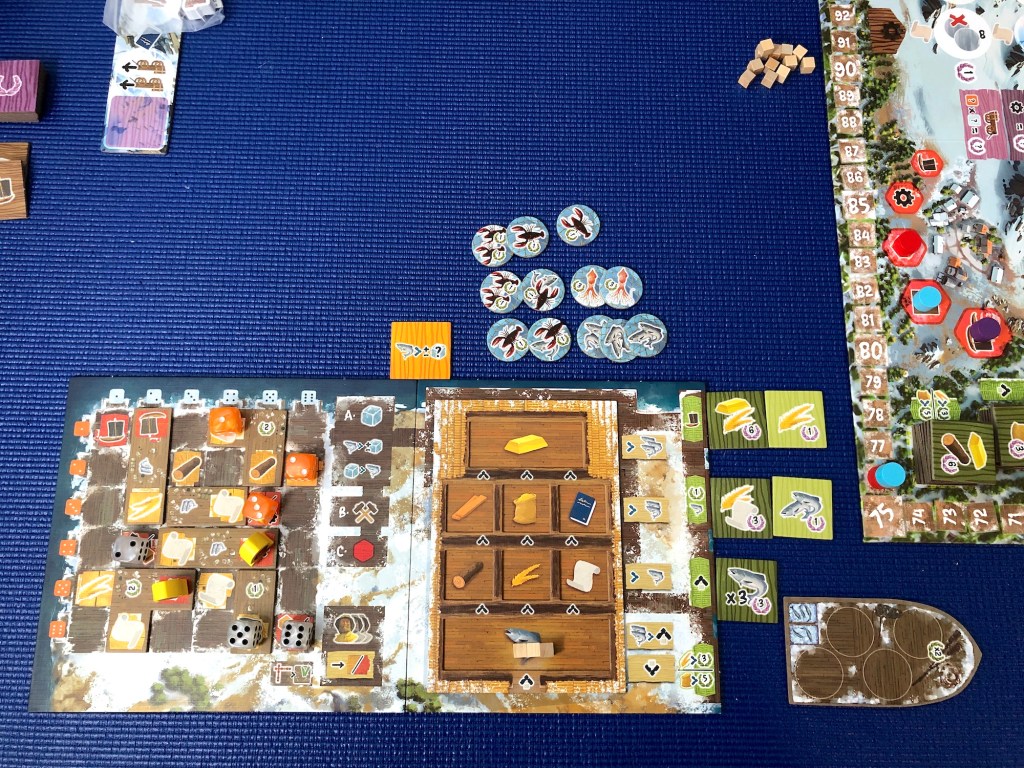
It can take time wrapping your head around the action mechanism in the game, with rows and columns and needing dice in the right color and value to do things. This was definitely a learning game, as there were some things, like the other ability tiles, that we barely touched.
Overall, not a bad game. Though it’s more of a mid-weight game, there can be moments of AP, trying to navigate several actions, counting resources, to try and arrive at one action later that you need to do. And towards the end, you might sit there for several minutes calculating only to realize it’s not mathematically possible to do what you want.
- Saltfjord: 7/10 (first impressions) a pretty solid Euro, but maybe doesn’t stand out much?
Valheim
:strip_icc()/pic9116961.png)
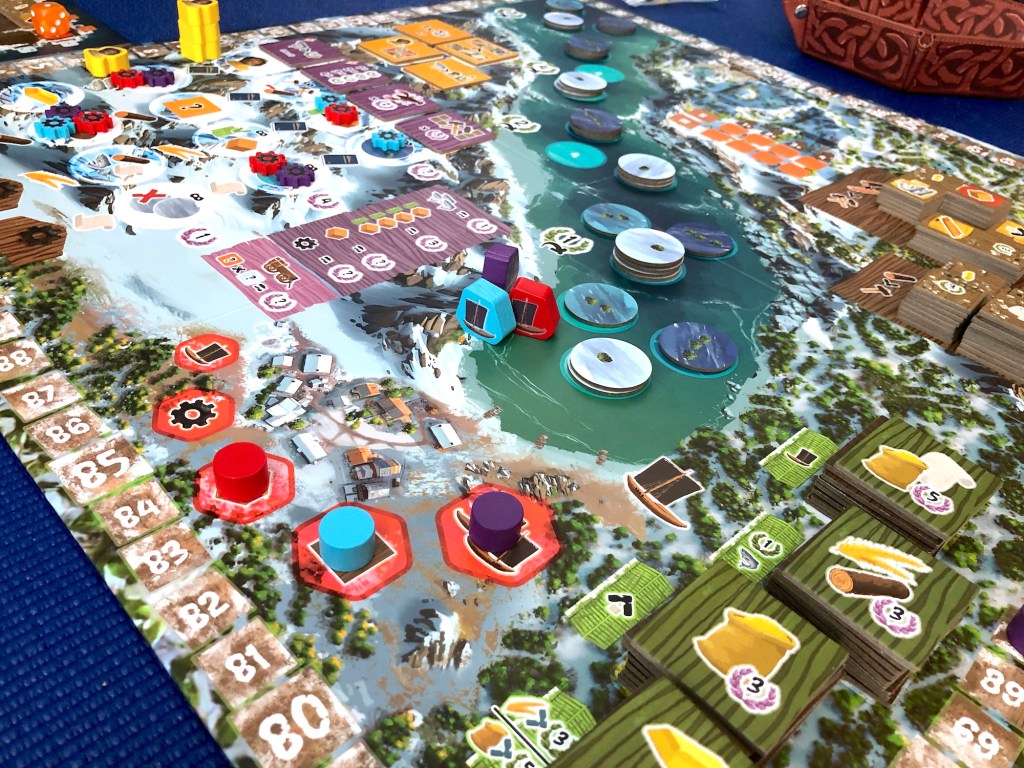
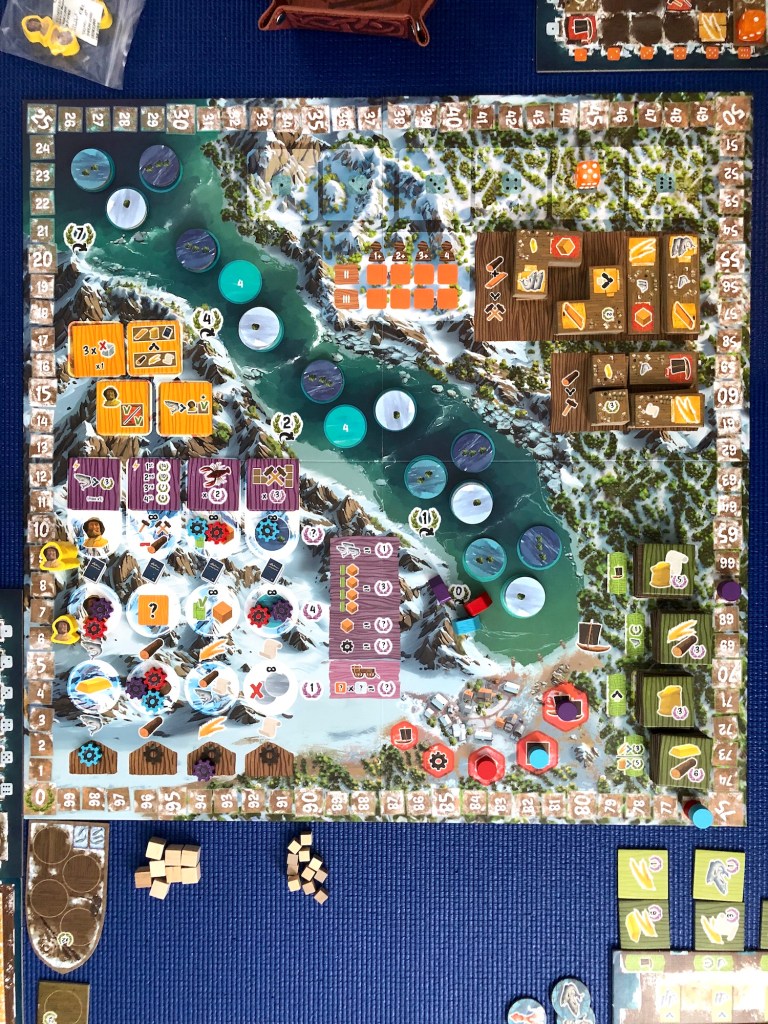
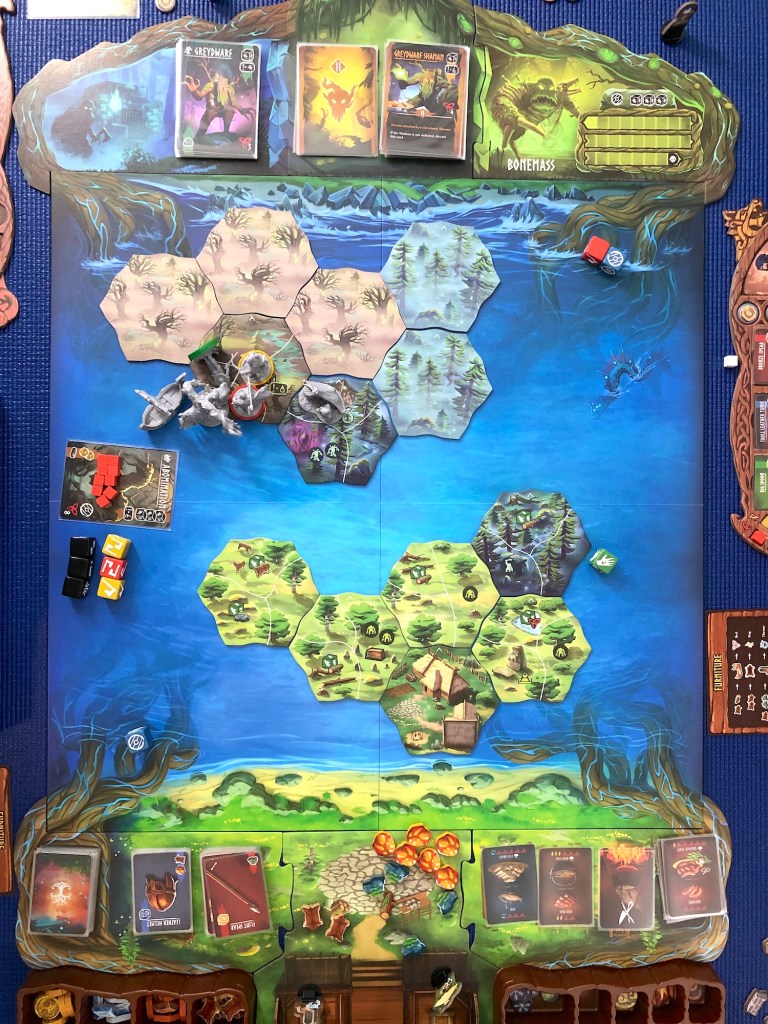
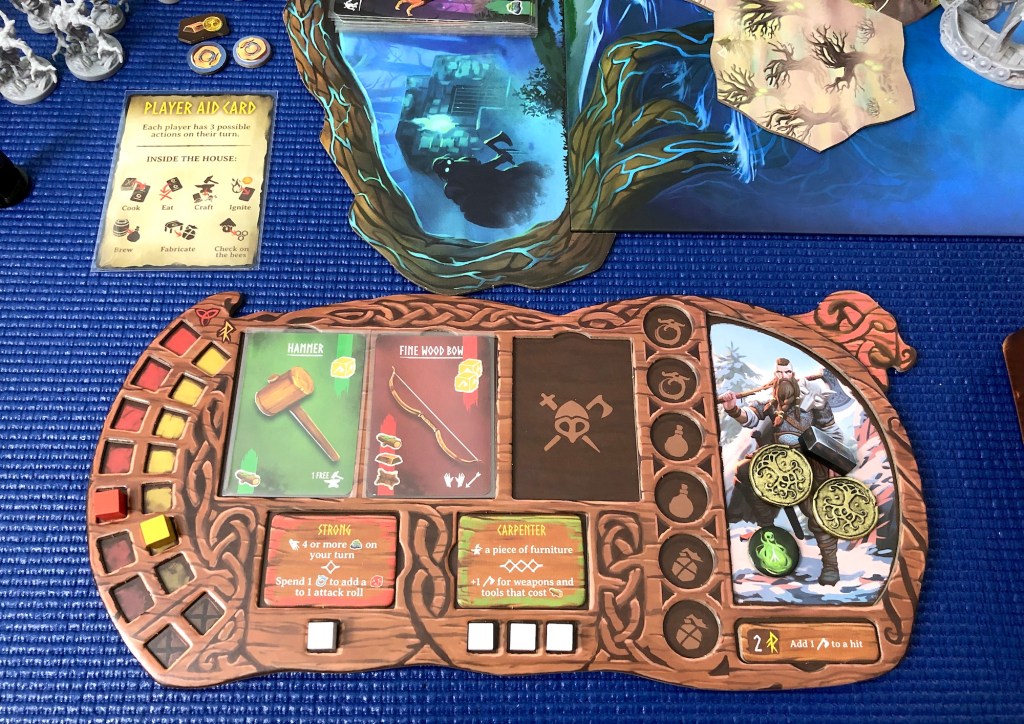
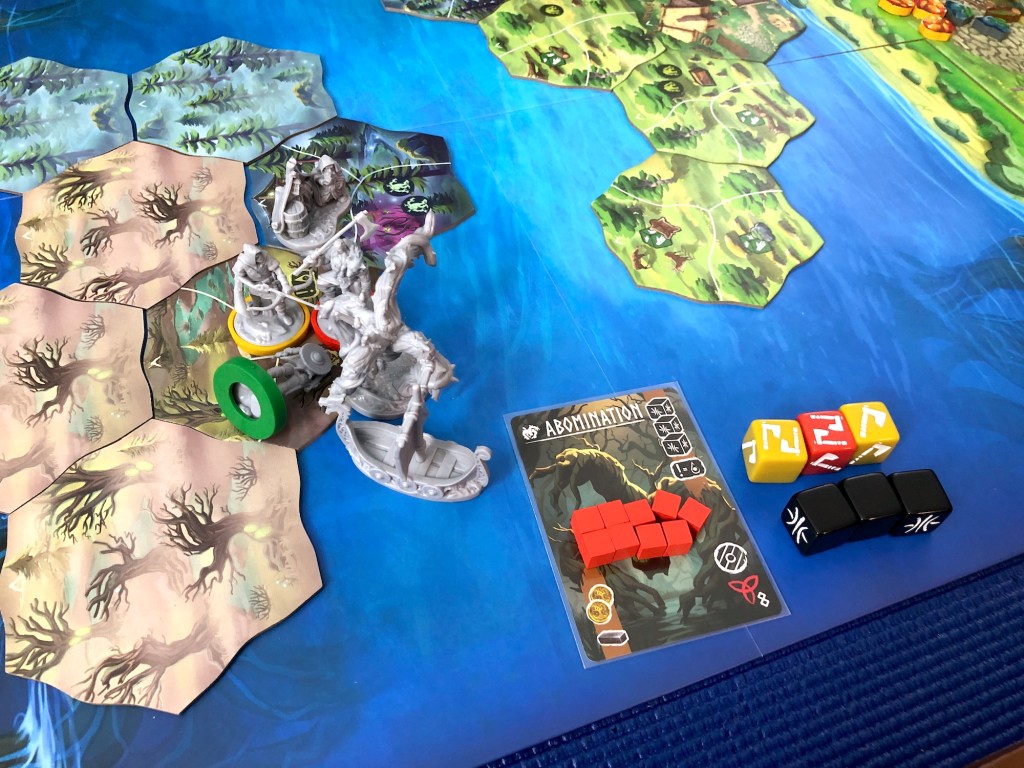
This one was my brother’s pick, and he chose a scenario with no frosaken battle. We were going a bit slow, and time was running out when we sailed off to explore the second island. We just happened to land on the abomination, the boss stand-in for the scenario.
At some point, we’ll have to try the campaign. It follows a progression similar to the video game, where you can’t gather certain resources until you’ve defeated the right boss. But defeating bosses gives you a new power for the rest of the campaign. Can’t wait to see what they do with the next few biomes.
- Valheim: 8/10 a fun if maybe loose adventure game.
Tenby
:strip_icc()/pic7880987.jpg)
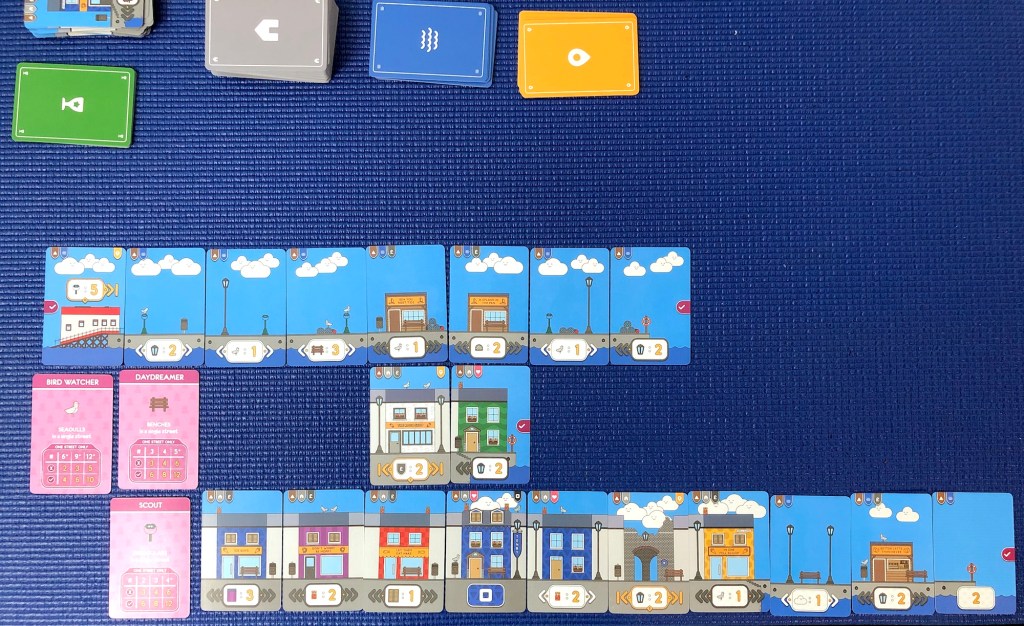
This was one we heard about a lot and were interested to try out. In the first few rounds, it didn’t seem like much, but after a bit, things clicked, and the decisions got a lot tougher. It’s definitely that kind of game where you can get overly ambitious with your plans, and find that you can’t finish everything you wanted.
The pink scoring cards were a little odd. Some, like what I kept drawing, scored little but you could score more if you worked really hard. But my brother kept drawing cards that could only score once, but scored pretty well. Didn’t seem like it was worth it for mine to work really hard for maybe a couple extra points if you score the max; I’d have rathered the easier cards that still score just fine. I still won anyway, so it’s not that they felt unbalanced, necessarily, though most of my score was from my streets.
- Tenby: 7/10 (first impressions) a neat card game with some tough decisions.
Fall of Rome
/pic8031112.jpg)
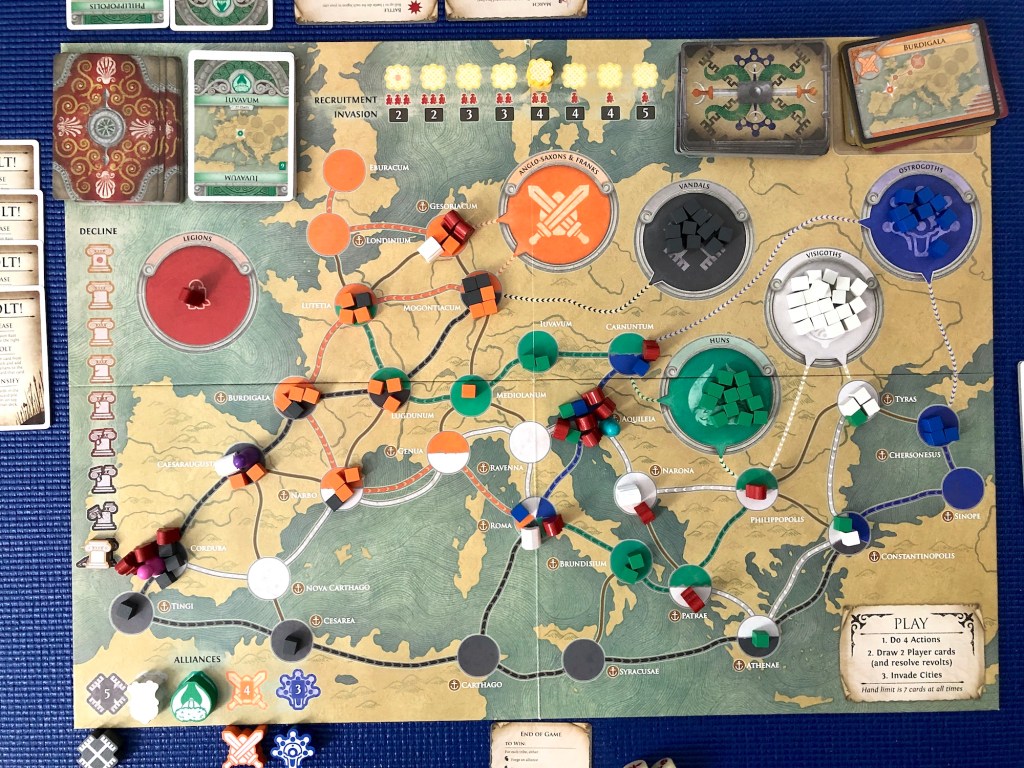
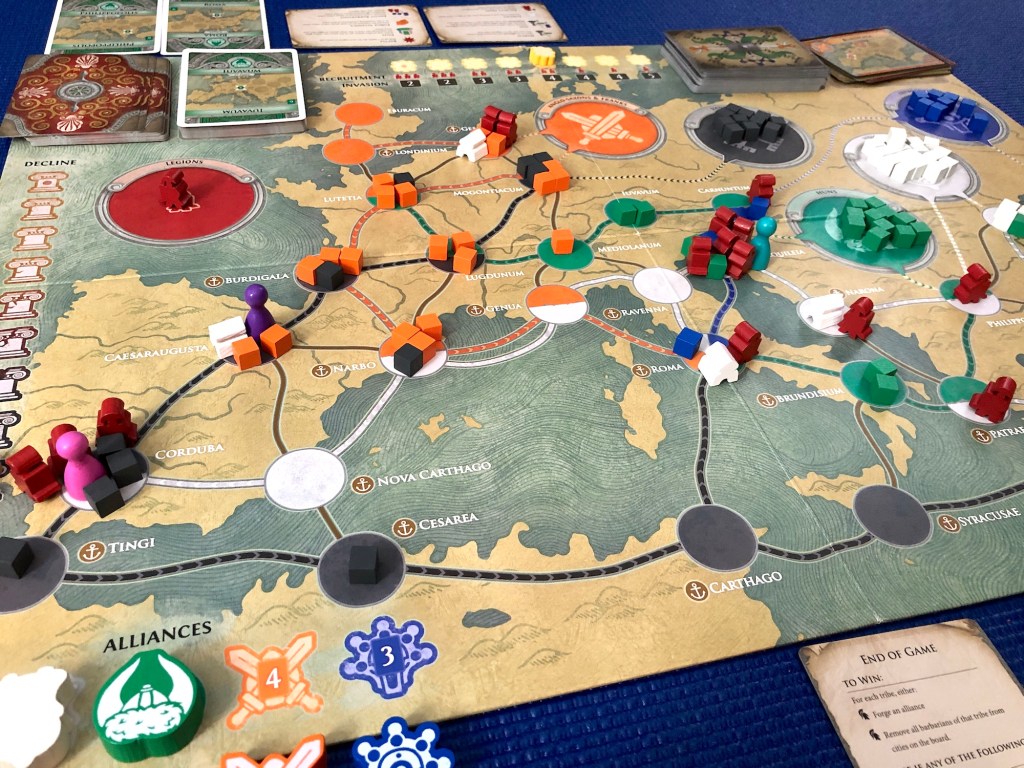
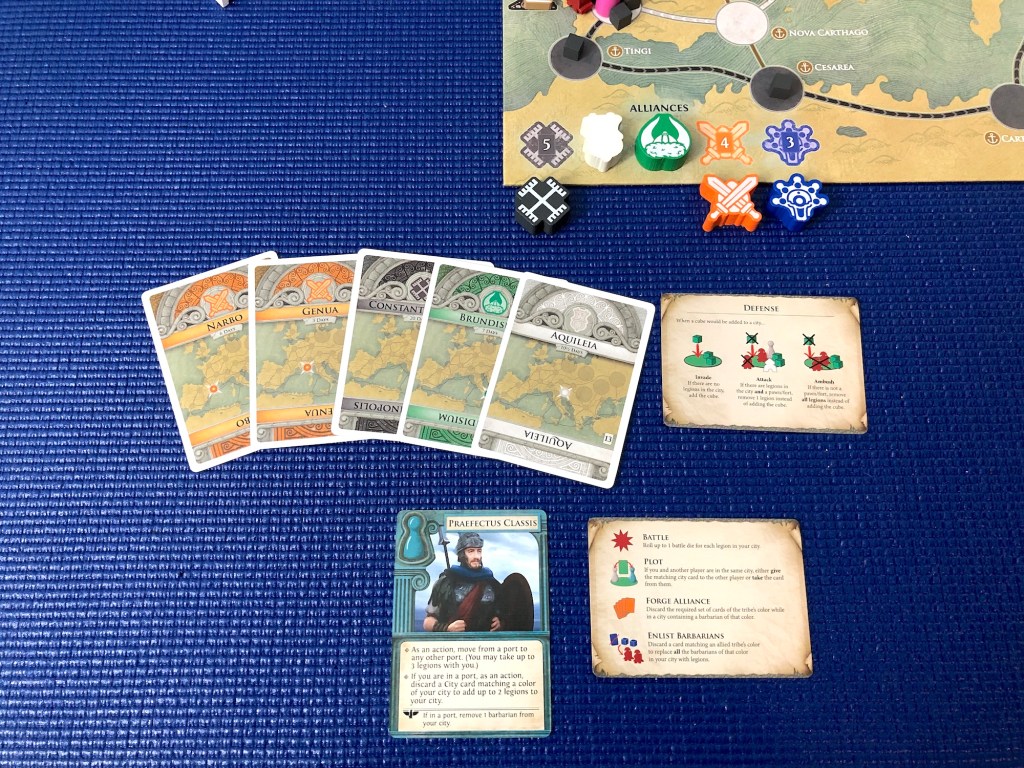
I had played this with my brother and solo, but this was our first 3-player game. We fudged things a little when a terrible chain reaction lost us the game only a few rounds in. I didn’t feel like resetting the decks, so we ignored the last outbreak (which would have run out of green). Things stabilized for a while, but the north exploded before we could get it under control.
This will hopefully make learning the Lord of the Rings one a little easier. I’d heard it’s quite a bit more complicated than the rest of the Pandemic games.
- Fall of Rome: 7/10 a quick and tense co-op and my kind of theme.
The Fellowship of the Ring: Trick-Taking Game
:strip_icc()/pic8437787.png)
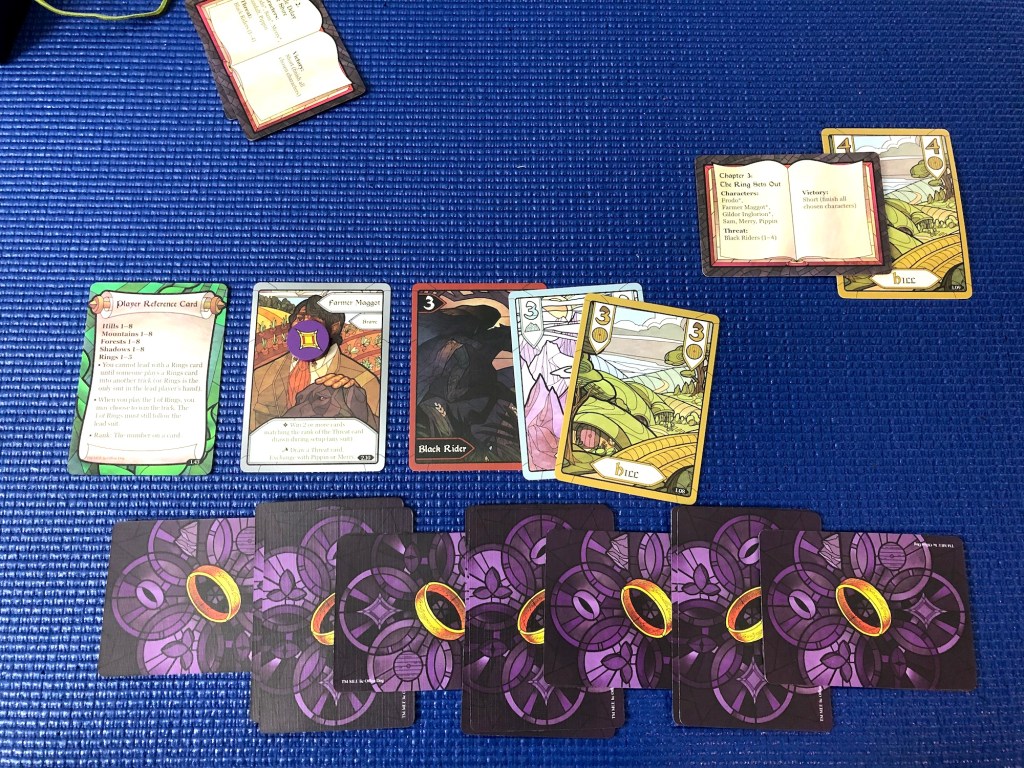
I thought this series looked really fun, so I showed it to my friend as something different for us to try. And since we have been watching lots of movies lately, the longer games have been set aside.
The first couple of chapters were definitely more about getting a feel for the game than anything. But we were getting the hang of it by the end. It’s an interesting co-op since you can’t communicate about your hand at all; you basically use the tricks as a way to communicate, and everyone needs to be paying attention. Everyone enjoyed it quite a bit. There are some neat ways they integrated theme into the characters.
The chapter card flavor text was pretty bad, though. They’re so low-effort, I’m not sure why they bothered. If you couldn’t get permission to do a short excerpt from the book, just do a little summary. We’ll probably skip them in the future unless one is humorously dumb.
- The Fellowship of the Ring: Trick-Taking Game: 8/10 (first impressions) a very quick, engaging co-op; easy to play multiple hands at a time.